
Specifying Solid Wood Designer Furniture for High-End Residential Projects: A Guide for Architects and Interior Designers
When a residential specification calls for solid wood, the decision rarely ends there. Species, joinery, finish tolerances and customisation limits all shape whether a piece performs the way a concept board promised, and whether it still looks right after a decade in a private home. For architects and interior designers working on high-end residential projects, getting these details right at the specification stage is what separates a furnished house from a collected one.
This guide walks through the questions worth resolving before a solid wood designer piece goes into a project schedule.
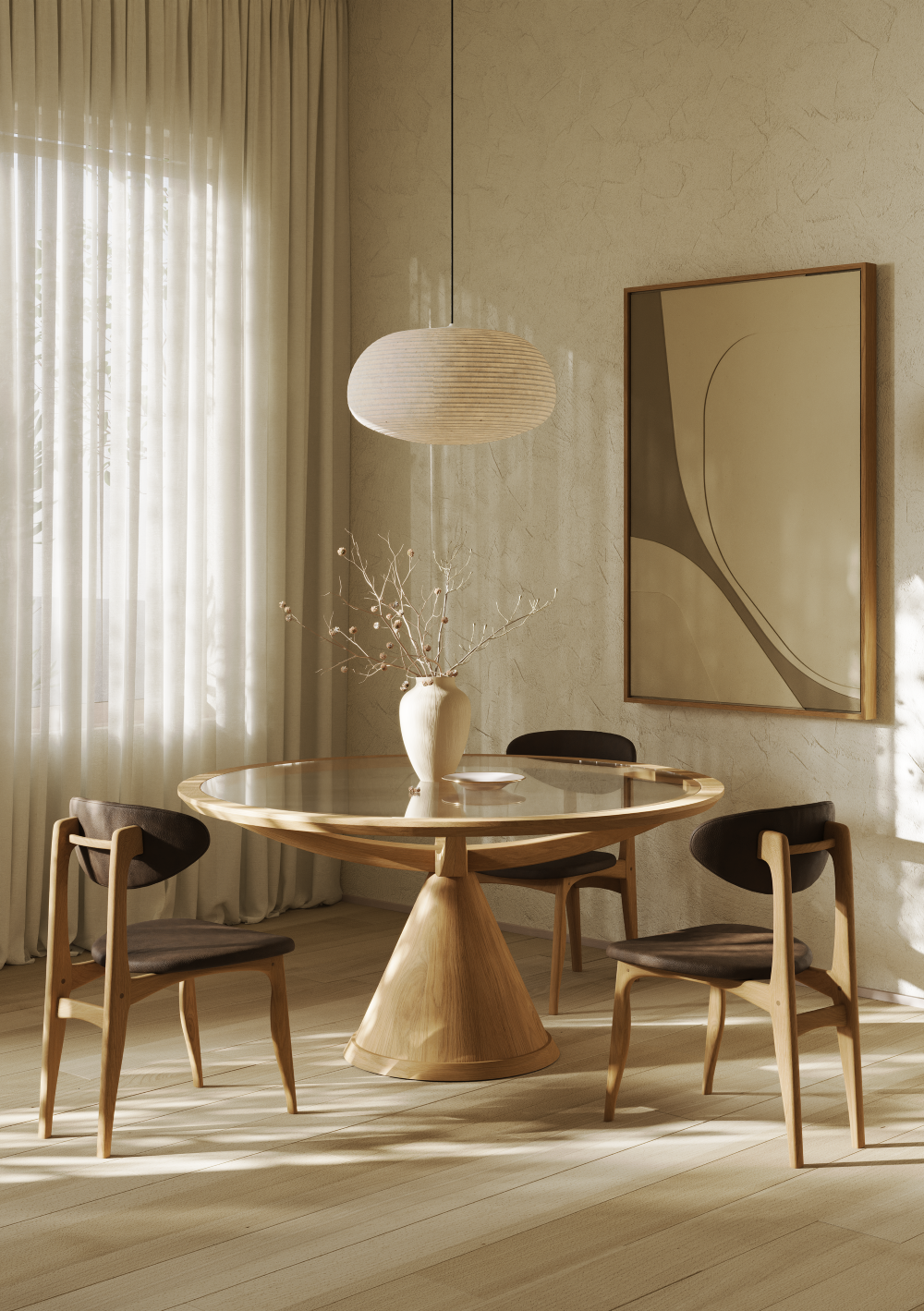
Why Solid Wood Still Matters in a Residential Specification
Engineered substrates and veneers have their place, particularly where budget or weight constraints dominate. But solid wood remains the reference material wherever a private client wants a piece that ages well rather than simply photographs well on handover day.
A few reasons it keeps appearing in serious residential specifications:
Refinishing potential. Solid wood can be sanded, re-oiled or re-varnished over decades, which matters for clients who think of furniture as something to keep, not replace.
Consistent grain through the piece. Carved details, profiled edges and visible joinery read as solid wood specifically because the material runs all the way through, something veneer cannot replicate convincingly at close range, and discerning clients notice.
Long-term material stability when properly seasoned. Correctly dried and worked solid timber holds its dimensions far better than is often assumed, provided the manufacturer controls moisture content for the home's climate.
A material story that holds up under scrutiny. For collectors and clients who ask where a piece comes from and how it was made, solid wood from a named designer and brand is a claim that can be verified simply by looking closely at the piece.
Provenance and designer authorship. A piece attributed to a specific designer, produced by a specific workshop, carries a narrative that a generic furnished interior doesn't, increasingly part of the brief on high-end residential work.
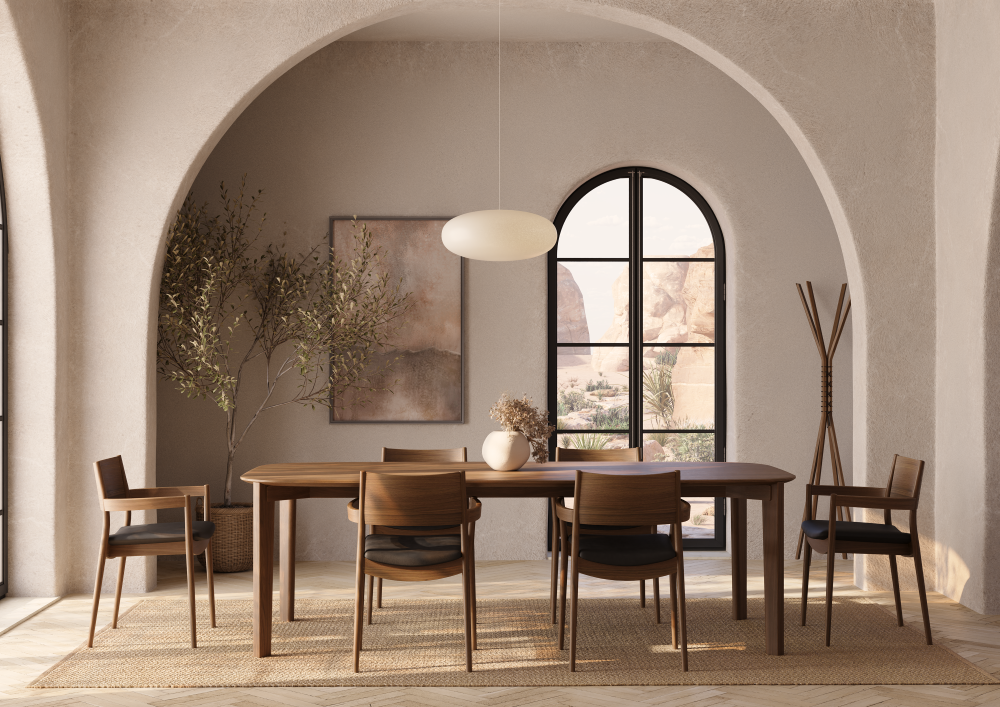
1. Which species, and why?
Species selection is rarely just aesthetic. Oak and walnut dominate high-end residential specifications for good reason: tight grain structure, predictable movement over time, and finishes that develop a rich patina rather than simply wearing down. Softer or lighter species can still work beautifully in lower-traffic rooms, a study, a bedroom, a guest suite, but it's worth confirming hardness and finish compatibility against how the room will actually be lived in, not just the mood board.
2. What joinery is actually being used?
This is the detail that separates furniture built to be inherited from furniture built to be replaced. Traditional joinery, mortise and tenon, dovetail, doweled and glued frame construction, distributes stress across a joint rather than concentrating it on a single fastener. For any piece that will see daily use over many years (dining chairs, headboards, case goods with drawers), ask the manufacturer directly how the frame is joined, not just what wood it's made from.
3. How is moisture content controlled?
A piece manufactured and seasoned for one climate can move, gap or crack in another. This matters in particular for international residential projects, a villa in the Gulf, an apartment in Northern Europe, a house in the Caribbean, where ambient humidity at the home differs substantially from the workshop's climate. A manufacturer with export experience should be able to state their kiln-drying targets and explain how they're adjusted per destination.
4. What can actually be customised, and what can't?
Custom dimensions, finishes and upholstery combinations are standard requests on high-end residential work, but not every manufacturer can accommodate them without compromising the joinery or proportions of the original design. Clarify early:
Dimensional tolerances for bespoke sizing (especially for case goods and dining tables built to fit a specific room)
Finish options beyond the standard catalogue range
Whether a piece can be adapted from an existing design or only ordered as shown
Whether technical drawings and CAD files are available for coordination with joinery, millwork and other trades on site
5. What does the lead time actually look like?
Artisanal production, by definition, does not scale instantly. For a residential project tied to a handover date or a client's moving timeline, lead time needs to be confirmed against real production capacity, not catalogue promises. A manufacturer with a dedicated trade channel for architects and designers typically has clearer visibility into production slots, and can commit to a date with more confidence than a standard retail order process allows.
6. Who designed it, and does that matter to the client?
For collectible, designer-led pieces, authorship is part of the value. A chair by a named international designer, produced by a workshop with a documented history, gives a client something to talk about, and gives the project a point of differentiation that a generic "solid wood dining chair" line item doesn't. Where the brief calls for a collected, design-conscious interior rather than a simply furnished one, it's worth specifying by designer and collection, not only by material and dimension.
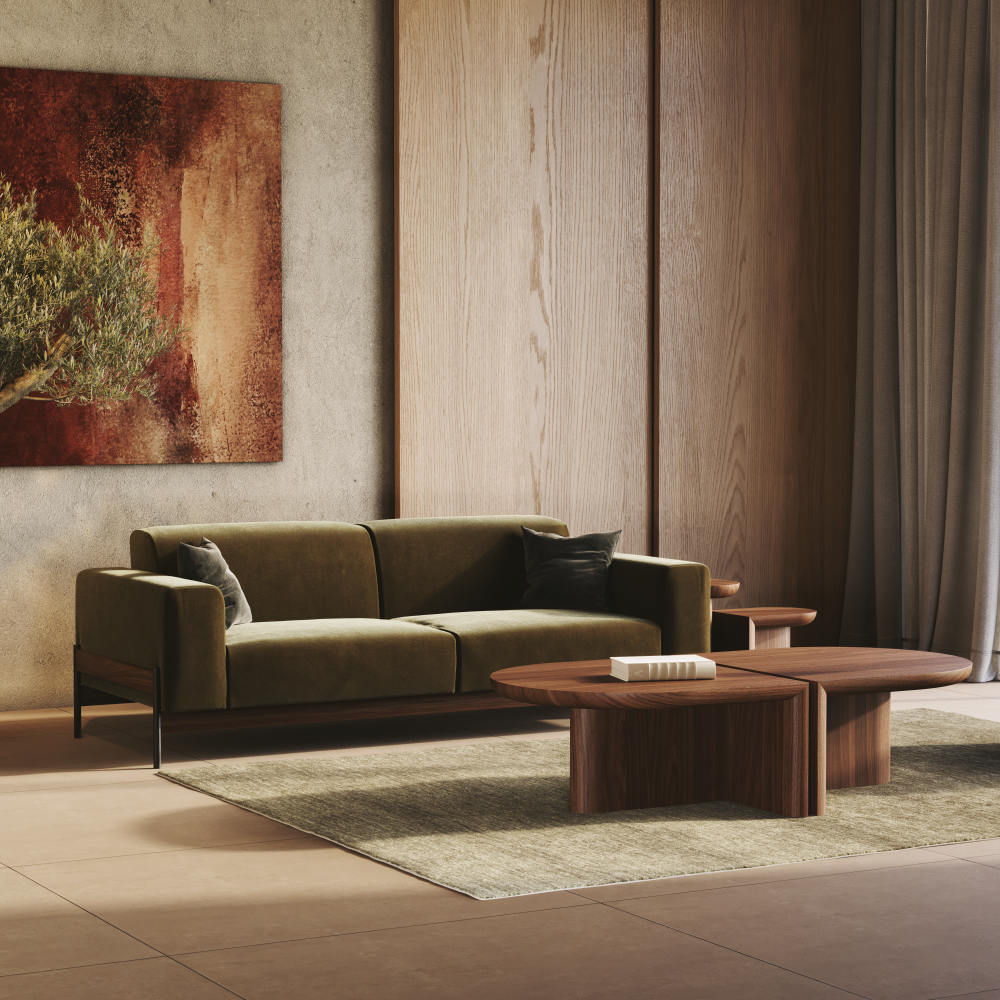
Where Wewood Fits This Brief
Wewood has been designing and manufacturing solid wood furniture in Portugal since 1964, working with international designers on collections built around traditional joinery and solid timber construction rather than panel-based substitutes. For architects and interior designers working on high-end residential projects, that translates into:
A Trade Programme with technical specifications and dedicated support for ongoing residential project work.
Solid wood designer collections spanning dining and coffee tables, seating, beds and storage, each attributed to a named designer and available with finish and dimensional customisation for project-specific requirements.
Decades of export experience to private residences well outside Portugal, with production processes adjusted for the destination climate.
A factory and design studio that can supply technical drawings and material samples directly to support specification documentation for a project.
Architects and interior designers working on an active residential project can request technical documentation, samples or a trade account directly through the Trade Programme, or get in touch with the team via the contact page to discuss project-specific requirements.