
From Workshop To Offsite: Wewood At Momoamo
An hour and a half from Paris, a new kind of retreat has opened its doors. Momoamo sits somewhere in between a hotel and a house, a 90-hectare estate built around an 18th-century château and reimagined as a refuge for companies looking for something more human than a conference room. Among the pieces chosen to furnish this in-between world are several from Wewood sold through our retailer Enky: the Re-Form tables by Alain Gilles, the Dome modular sofa by Erno Dierckx, the Bridge desk by Christophe de Sousa and the Nido lounge chair by Christian Haas.
A house, not a hotel
Architect Thibaut Picard led the transformation of the estate into a place that carries the polish of hospitality without ever losing the feeling of being at home. That balance, welcoming but never generic, considered but never stiff, is exactly the territory Wewood's furniture is designed to occupy. Solid wood ages the way a house does, gathering character rather than losing it, which makes it a natural fit for a project built on the idea of longevity and warmth over spectacle.
Re-Form: a SET OF tableS that holds a room together
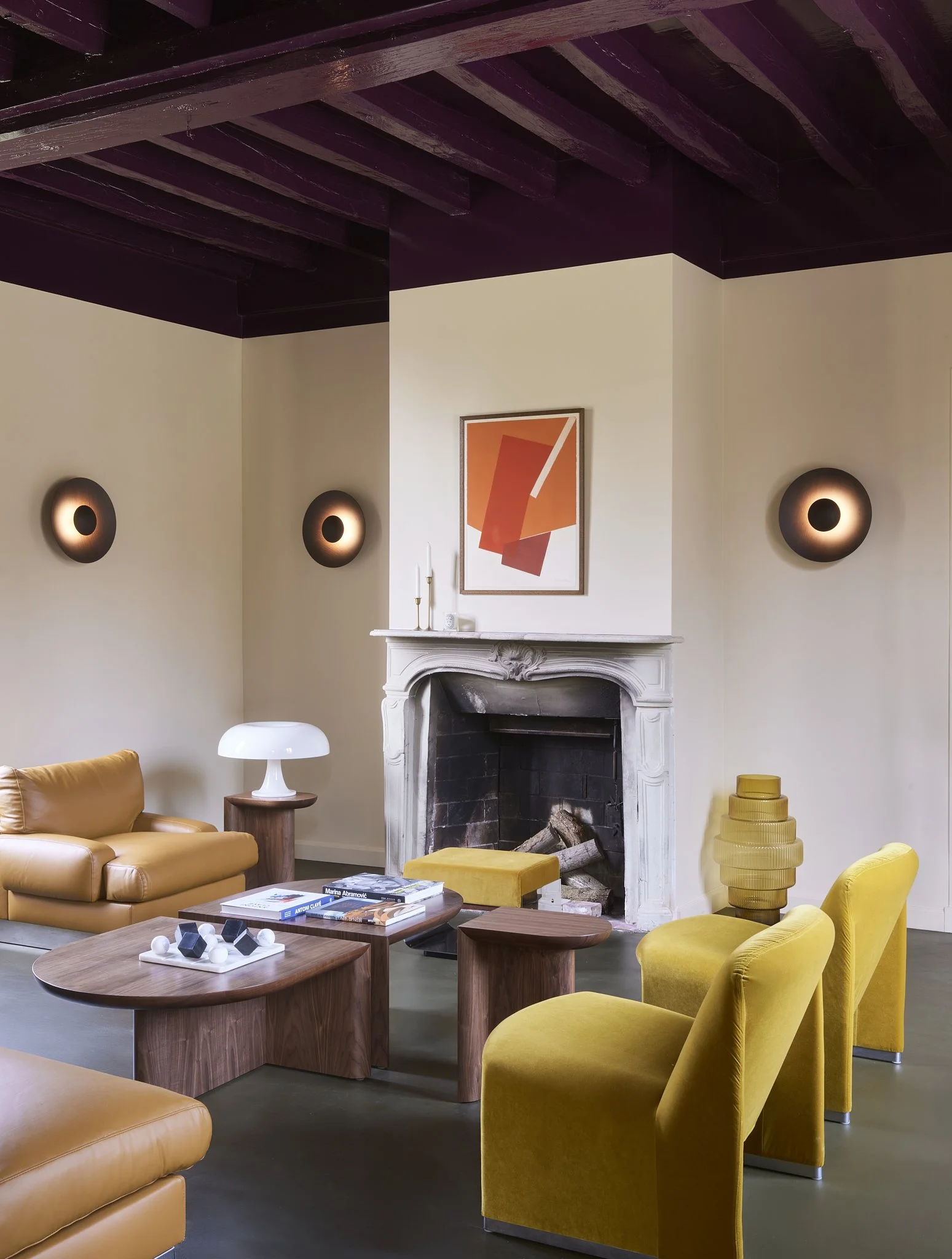
In the shared spaces at Momoamo, where the goal is to bring a group of colleagues back into the same conversation, the Re-Form tables by Alain Gilles does quiet, structural work. Its sculptural base, solid wood shaped into interlocking geometric volumes , gives the piece a presence that doesn't need to shout. It reads as sculpture as much as furniture, but it's built for use: for coffee cups, for notebooks, for the informal moments between formal ones where offsites actually earn their keep.
That duality is precisely what Momoamo's interiors are after, spaces where the architecture stays legible as a historic château, but the objects inside feel entirely of today. Re-Form's contrast of solid, grounded volumes with a refined, contemporary silhouette mirrors the dialogue the design team drew between the estate's original stone façades and its very current interiors.
Dome: a sofa built for gathering
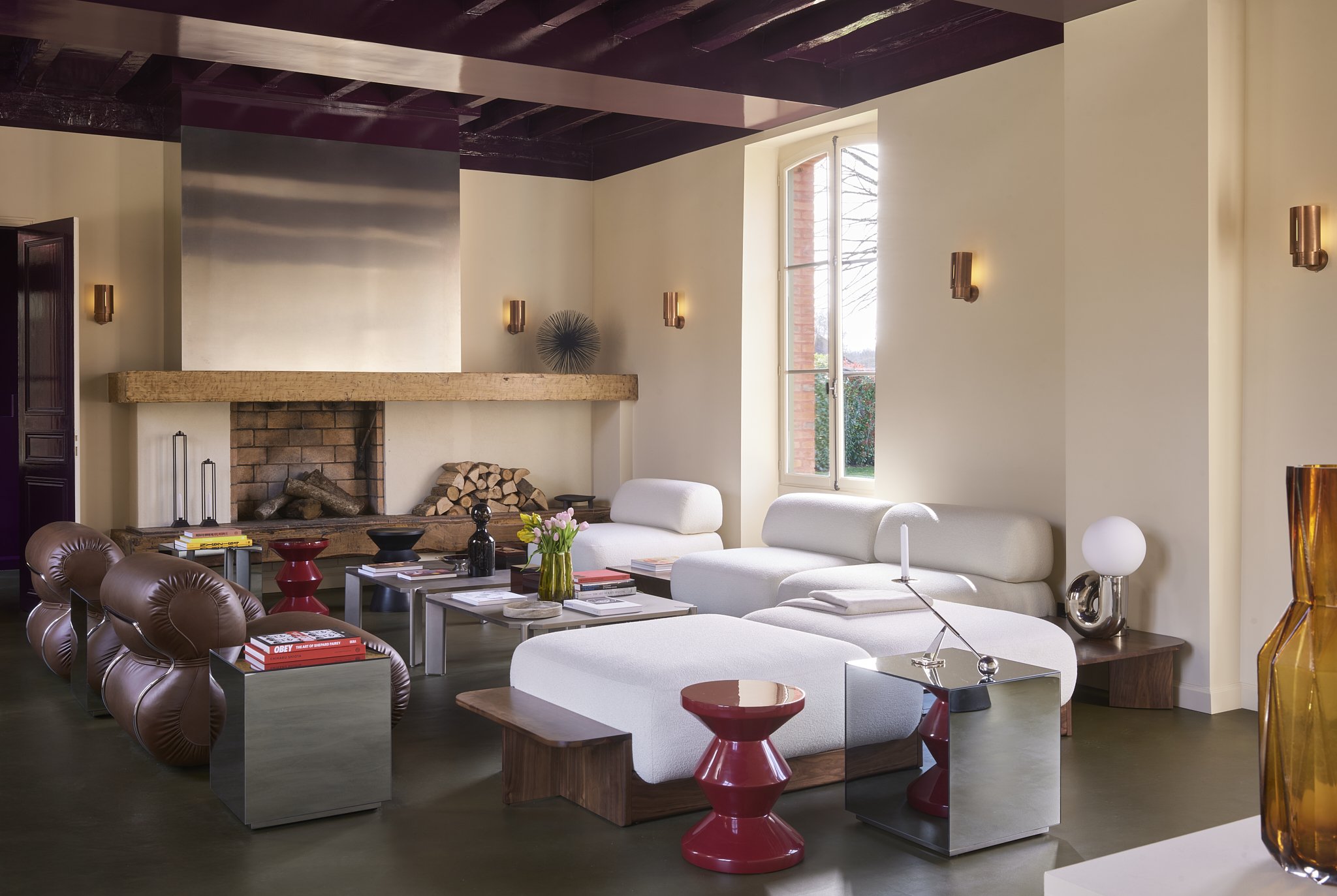
If Re-Form anchors a room, the Dome modular sofa by Erno Dierckx is what invites people to actually stay in it. Designed with soft, rounded volumes and a modular structure, Dome adapts to the rhythm of a space the way a good offsite adapts to a group, reconfiguring for a small breakout conversation one hour and a full team debrief the next. Its enveloping shape and tactile upholstery give it the comfort of a piece you'd choose for your own living room, which is exactly the sentiment Momoamo was built around: professional life, without professional-feeling furniture.
Dome softens the formality that grand architecture can bring, doing for a lounge what Re-Form does for a table, making a historic space feel lived-in.
In the rooms: a quieter register
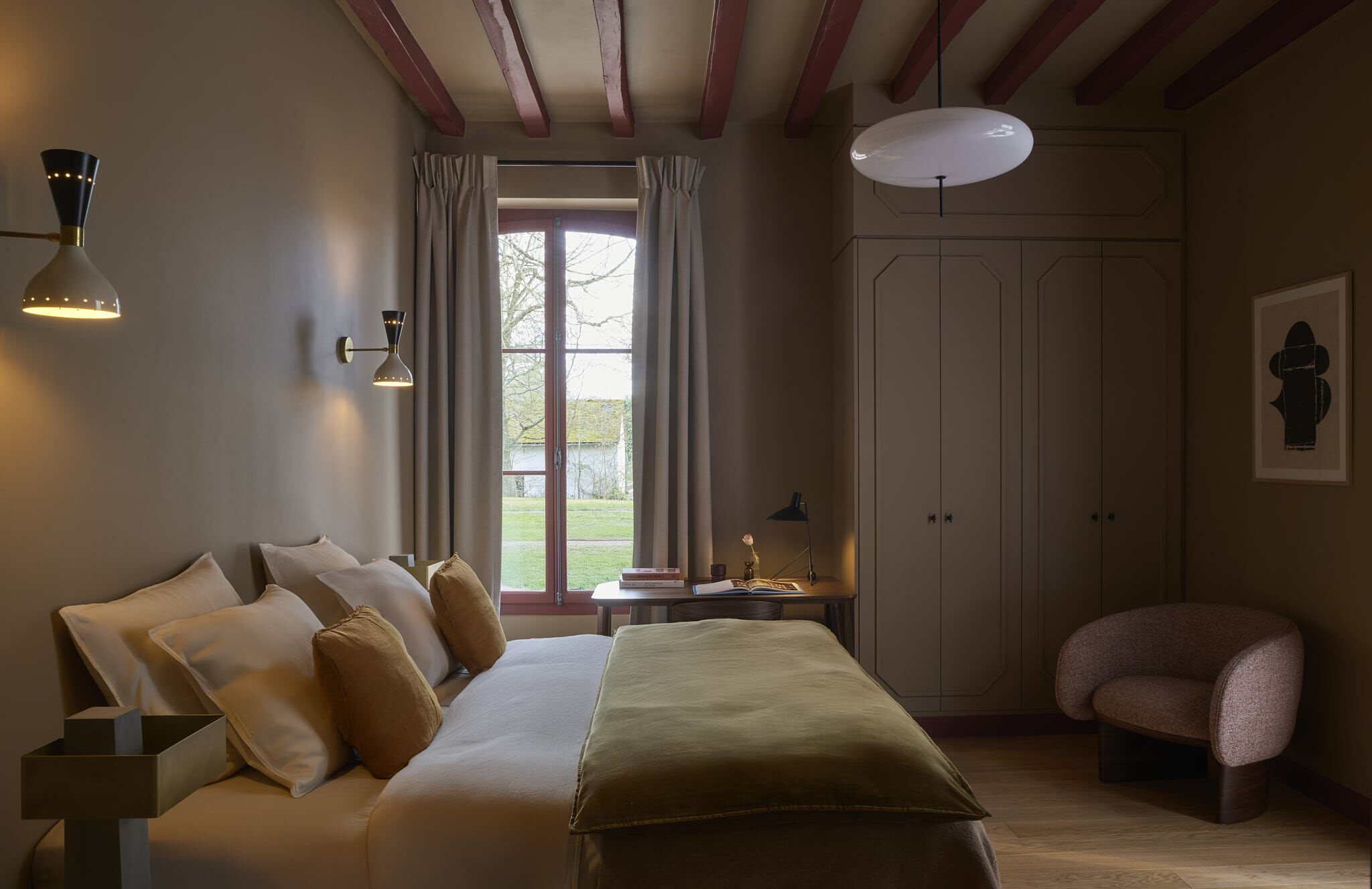
In the bedrooms, the furniture shifts into a more private register. The Bridge desk, by Christophe de Sousa, gives each room a small, self-contained workspace, with clean lines and a compact footprint that stays out of the way until it’s needed, useful for the person who wants to jot down a thought before the next session without leaving their room. Alongside it, the Nido lounge chair by Christian Haas offers a place to sit simply: enveloping, softly upholstered, built for reading or unwinding rather than working. Together they let each bedroom hold both registers a good offsite needs. a moment of focus and a moment of rest, without either one crowding the other.
Furniture as part of the brief
What makes Momoamo interesting from a furniture perspective is that nothing was chosen to simply fill space. Every piece, Wewood's included, was selected to support a larger idea: that a company retreat can feel like being hosted by a friend rather than checking into a hotel. Re-Form and Dome carry that idea into two of the project's most-used spaces, while Bridge and Nido offer a moment of focus, a moment of rest, neither one ever raising its voice over the other.
It's a fitting home for both designs. Solid wood furniture, built to be lived with over decades, finds its purpose in a place designed around exactly that kind of longevity.