
Kaya: An Object for the Unhurried
A set of two coffee tables conceived as a quiet place, for objects, for rituals, for the unhurried time between things.
Some objects announce themselves. Others simply settle into a room as though they had always been there. Kaya, a set of two coffee tables designed by Ümit Çağlar for our 2026 collection, belongs unmistakably to the second kind.
The name carries a double residence. In Japanese, kaya holds two meanings at once: a restful place, a sense of home, and also a variety of natural wood, one of the most elemental of materials. These definitions do not compete; they complete each other. The word itself performs what the design attempts: to be simultaneously a surface and a shelter.
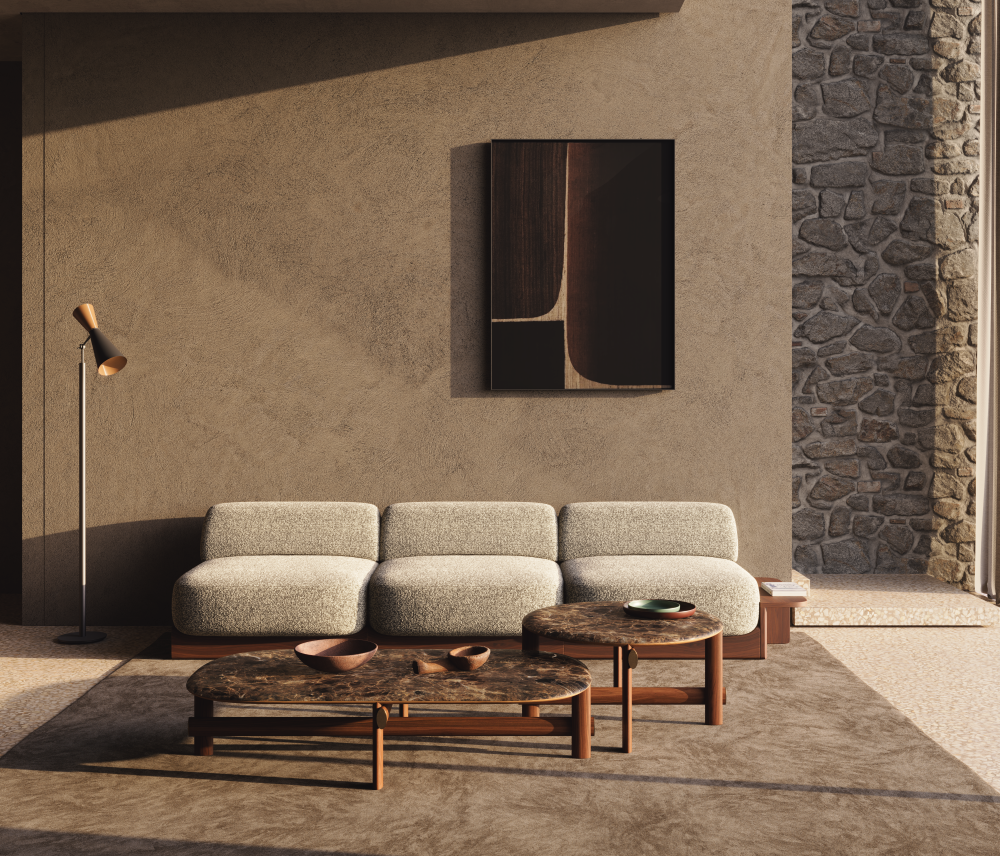
The way an object is placed. The quality of a surface. The pause before speaking.
The conceptual framework reaches toward Sadō, the Japanese tea ceremony, which is at its core a philosophy of attention, not tea as a beverage but tea as practice: deliberate, unhurried, precise in its small gestures. Furniture designed within that spirit does not ask to be noticed. It rewards those who choose to look.
Form and Material
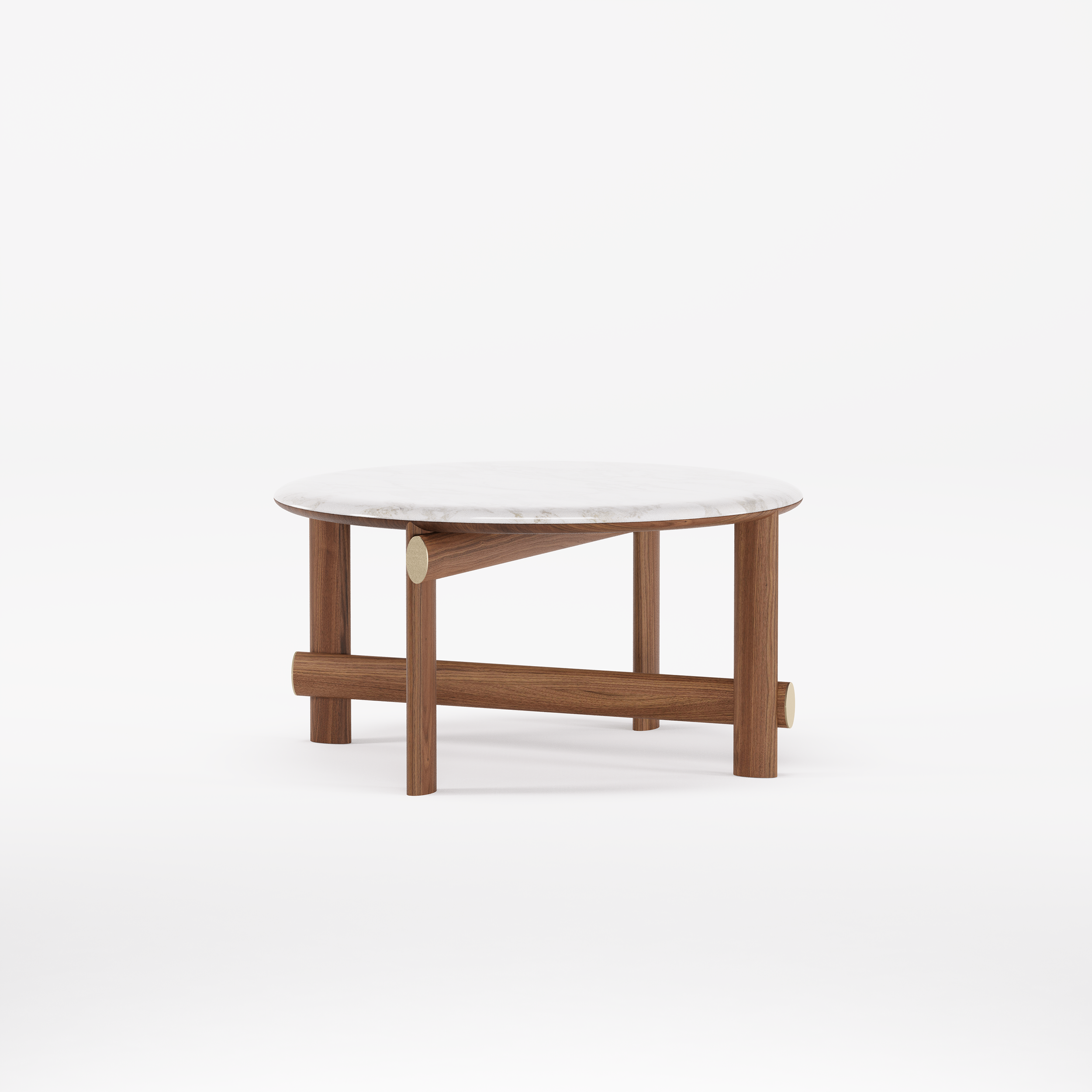
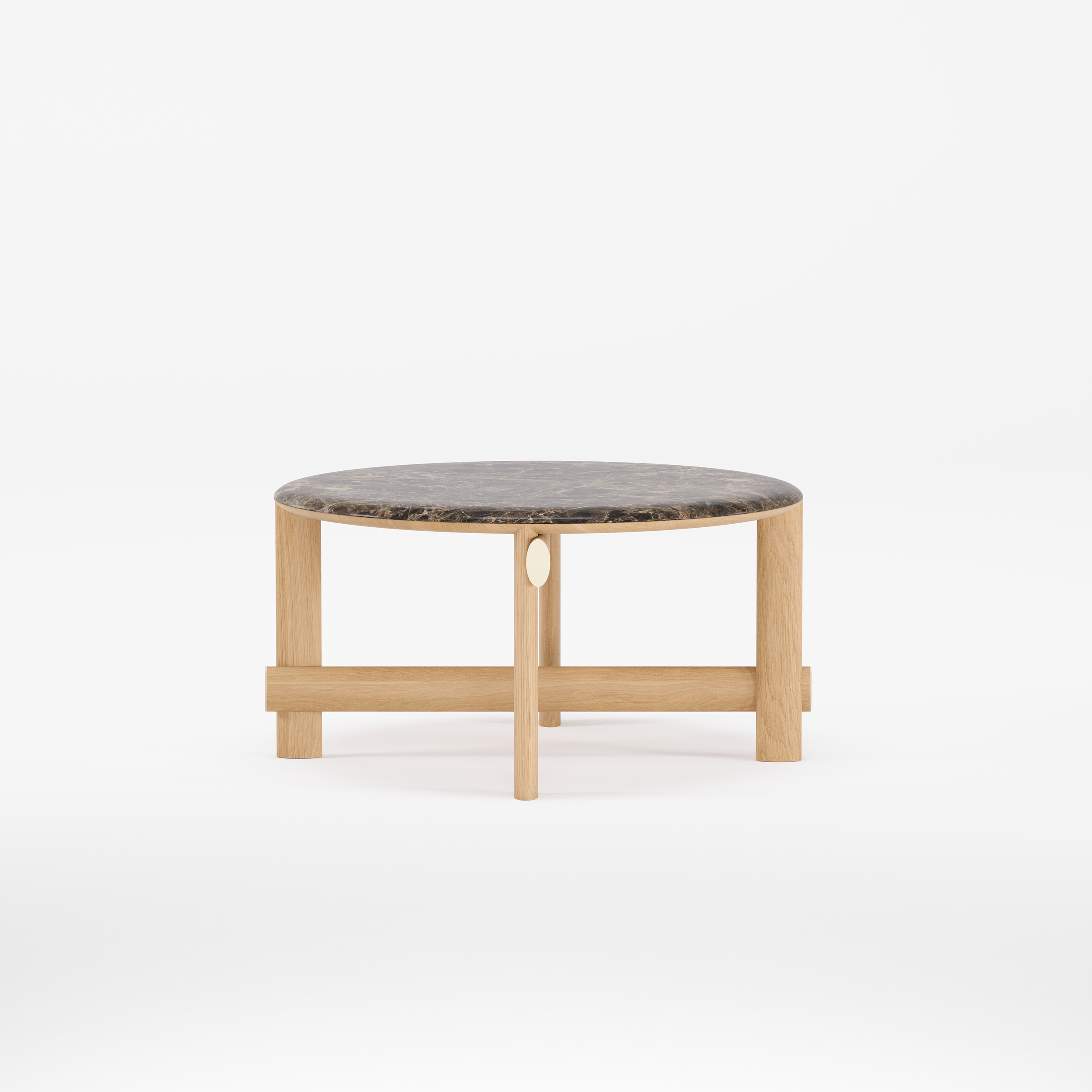
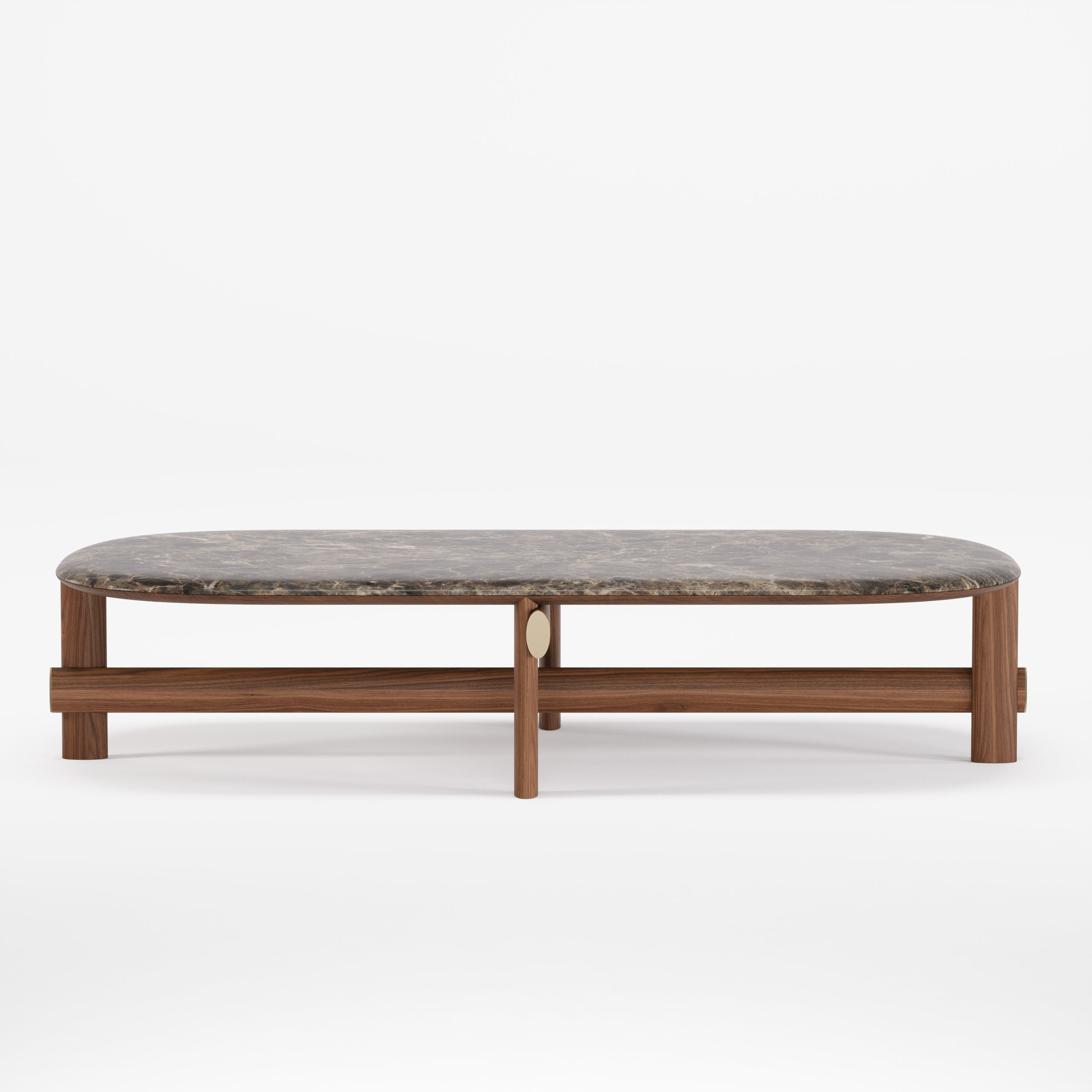
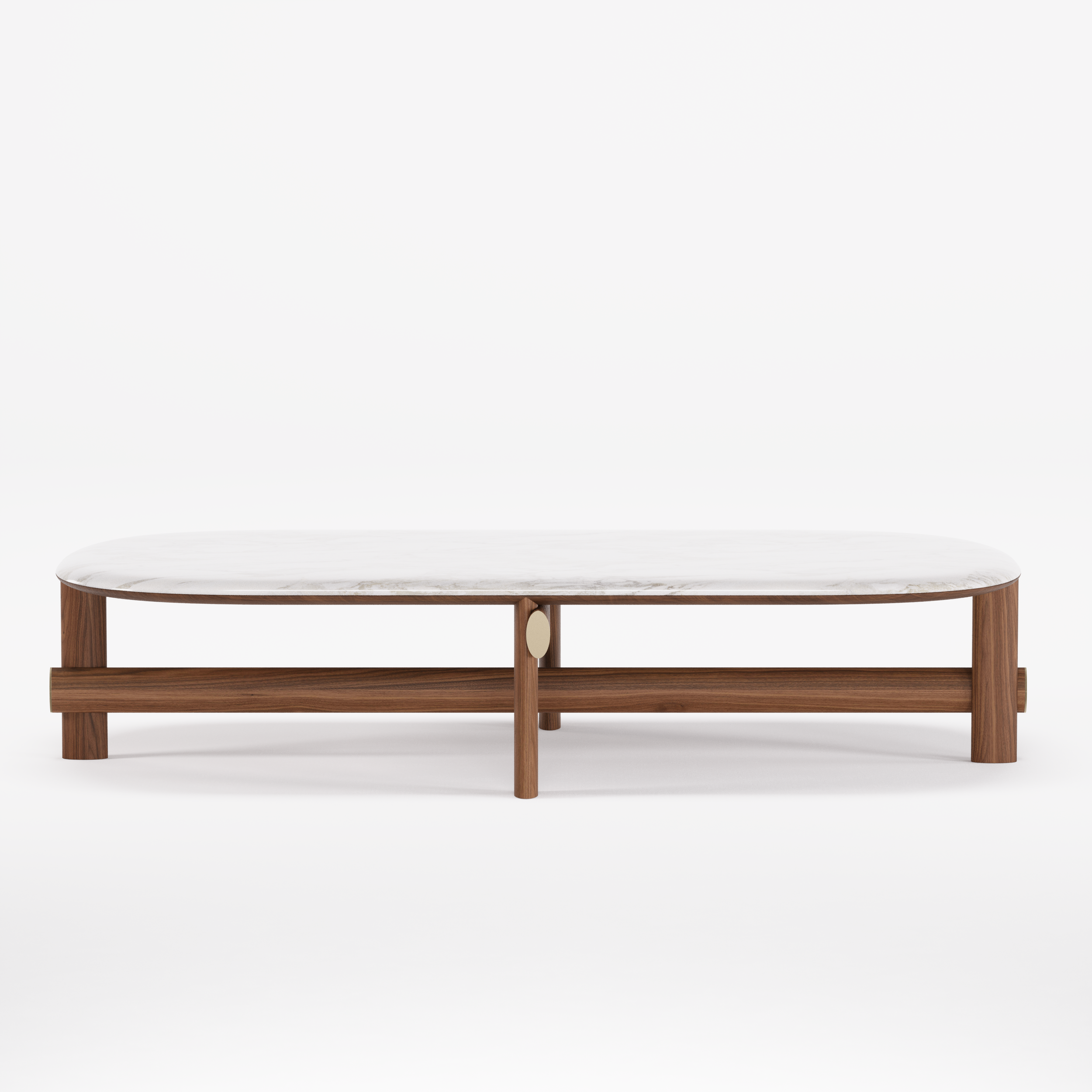
The construction is guided by traditional cabinetmaking. Structural joinery defines the whole, connections that are visible, legible, honest about how the piece is made. In oak or walnut, the natural grain becomes a participant in the composition rather than a backdrop: each surface a record of growth, of specific geography and time.
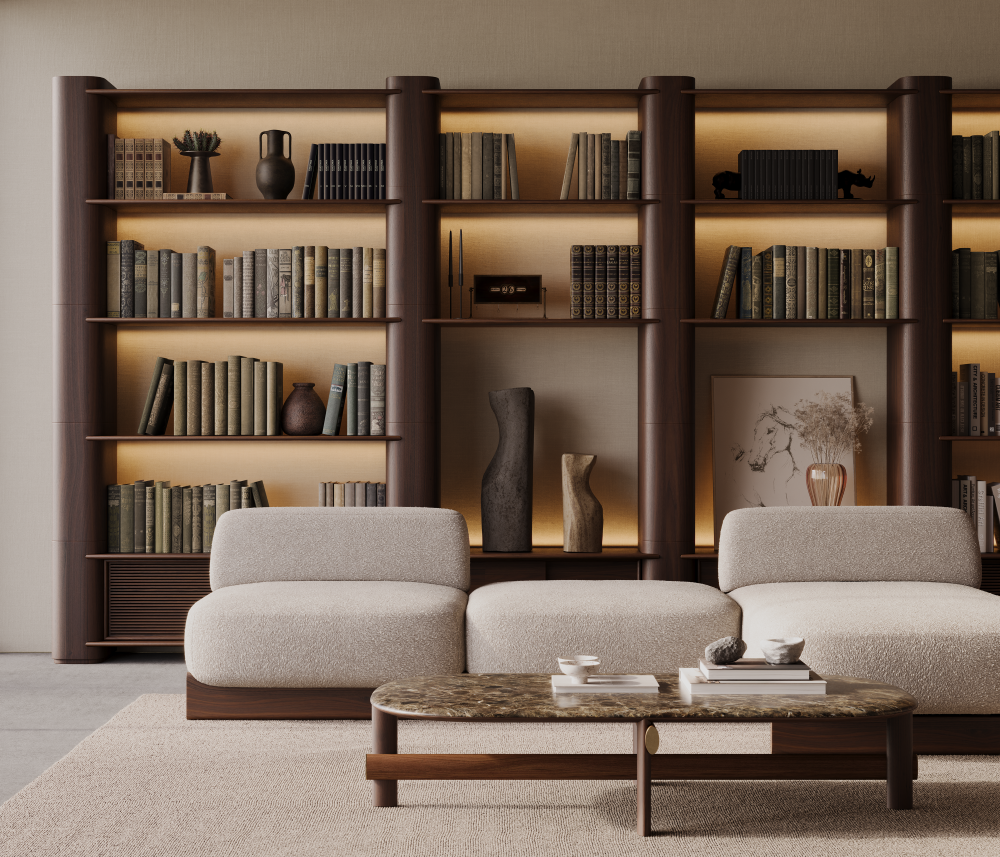
What distinguishes the design is its understanding of interval. The two tables, one oval, lower and wider; one round, taller and more concentrated, establish a conversation when placed together, a rhythm in space that alternates between proximity and breathing room. Used separately, each holds its position without apology, adapting to different sensibilities and the varying demands of a room across a day.
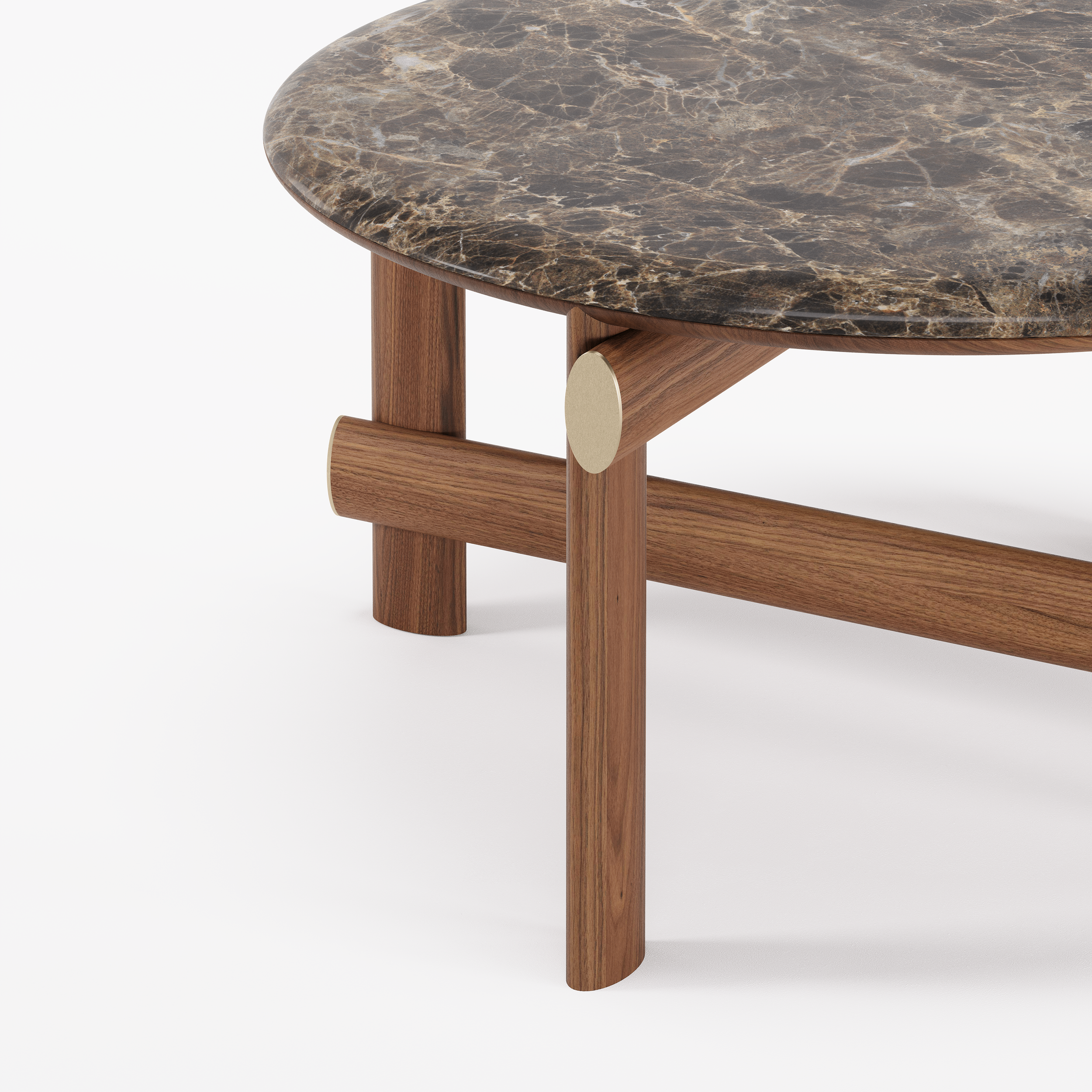
The addition of marble is precise rather than decorative. Set against the warmth of the wood, it brings its own geological time to the surface, cool, weighted, particular. A refined brass detail completes the material statement: one clear note in a quiet score, marking the junction between materials with the precision of a full stop.
These are materials that age well. They deepen rather than diminish. Kaya is invested entirely in this, the conviction that the most considered objects do not peak at acquisition, but accumulate character across years of habitation, becoming, through use, more themselves.
The Designer

Ümit Çağlar trained as an interior architect at Izmir University of Economics and later at the Berliner Technische Kunsthochschule. He was raised in a carpenter's household, a fact not incidental to his practice but foundational to it. The intimacy with wood that most designers acquire through study, Çağlar absorbed through proximity: through the smell of sawdust and timber, through watching materials submit to skilled hands.
His practice spans interior architecture, furniture design, yacht design, and media arts, a breadth that produces, paradoxically, great focus. What runs through all of it is a search for the meeting point between organic form and traditional craft, between the hand-made and the precisely conceived.
Kaya is his first collaboration with us. It arrives as a statement of confidence in restraint, the understanding that the most enduring objects are often those that make no demand of the room, but reward it simply by being present.